
Is The Fourteenth Amendment Retarded
And Can it be Fixed

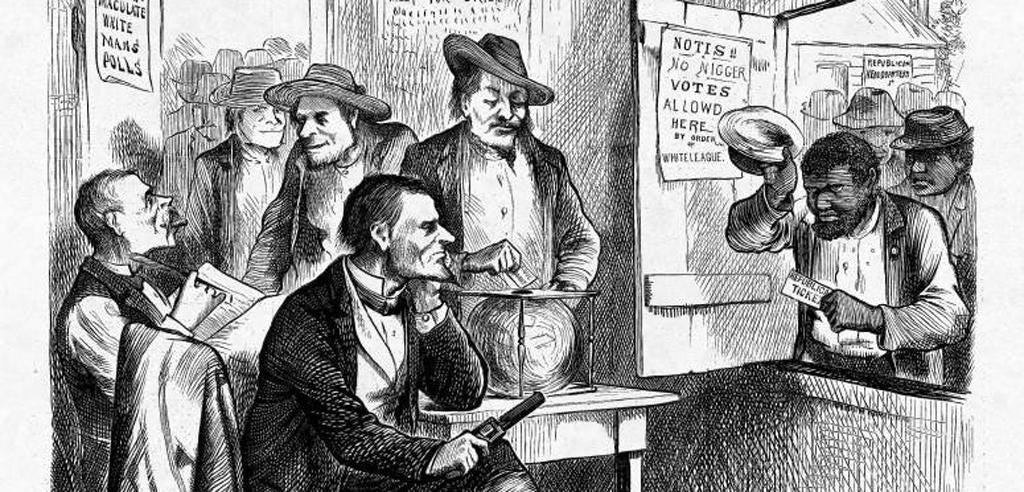
This article builds off of one of Sectionalism Archive’s old articles:

When this article was initially released, I made some comment about it since, as you all know by now, I’m in law school. It was either a lengthy comment, or a restack, but it has since been lost due to the tragedy of the First Substack Banocaust.1 Obviously, I don’t have access to whatever it was that I originally said but the gist of it is that Sectionalism was correct, although I believe that there should be a Constitutional vehicle for increasing Federal authority.
I’ve completed my Constitutional Law course (which is required of all law students) and we discussed the 14th Amendment, and its Due Process and Equal Protections Clauses specifically in great detail. As Sectionalism, more or less, correctly points out: these are the important clauses for the 14th Amendment. I say more or less because the Equal Protections Clause of the 14th Amendment is actually basically completely worthless in modern jurisprudence. That’s actually an important part of the post, so we will get back to it later.
Anyway, this made me want to revisit this topic for a few reasons. For one, I feel like it’s worth [re-]elaborating on my position about how the 14th Amendment is actually not necessarily bad, but has had an incredibly flawed execution and has also had some devastating effects on the country. Second, now that I’ve actually had the chance to read the relevant caselaw in law school, I feel like I have a better understanding of the issue. Specifically, I think I can go into the proper level of detail that neither Sectionalism nor Alt Hype (who Sectionalism defers to) can, because this is an issue that you simply will not understand without reading a lot of caselaw, much of which actually comes from non-Civil Rights cases.
Accordingly, this post will be one the denser side of my articles but I’ll make it as digestible as possible. Naturally, this article will cover a lot of legal history, but it will also cover some very important dissents (particularly from Justice Clarence Thomas, the realist nigga around), because these dissents help to not only illustrate the flaws of modern 14A implementation, but to also show how it can be fixed, and in a few cases how it actually was fixed.
I’ll start by laying some historical groundwork regarding the effect of the 14th Amendment right after its ratification, and the SCOTUS caselaw that emerged in the immediate decades. Then I’ll hit each of the big 14th Amendment social issues (Civil Rights, Abortion, Gay Marriage, etc.) and where they stand right now, as well as critiquing their implementation. Finally, I’ll end it with what I think needs to stay with the 14th Amendment and what needs to go, as well as the reasons why I think it’s fundamentally a good thing, even though the execution is very libtarded in a lot of cases today.
Historical Background
Ratification
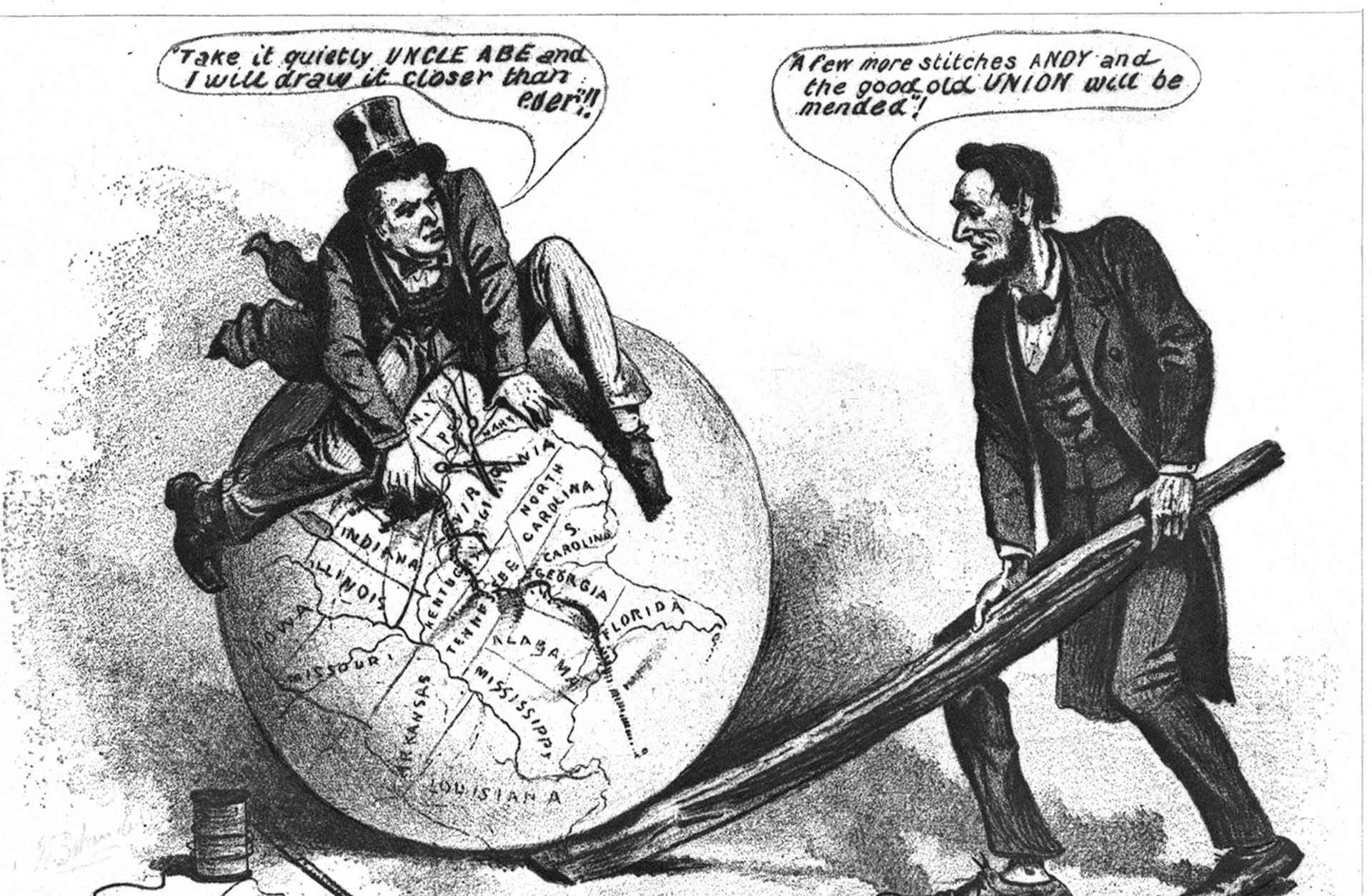
As Sectionalism points out, the “Civil War Amendments” (13-15) were initially proposed and ratified in the immediate aftermath of the Civil War, at which point the former Confederate States were not given a say in the matter. These Amendments were ostensibly a form of punishment for the former Confederate States, and a means of increasing Federal control over them. Naturally, these Amendments were deeply unpopular in the South for decades afterward, and many people questioned (and still do) their legitimacy for the aforementioned reason of the South’s exclusion from the amendment process.
I’m not going to get into any serious discussion of this argument, because it isn’t relevant for what I’m actually saying in this article, but it’s worth mentioning. I’m also not aware of any case where this argument was seriously considered by SCOTUS, but I’ve never really looked into that too deeply.
Personally, I’m sympathetic to the argument as it is a clear departure from United States legal tradition. If the Union was contending that the Confederate States could not legitimately secede from the Union (and they were) then they have no real basis to say that the South does not get a say in the process of Amending the Constitution. On they other hand, history has shown that Might Makes Right and that this was the inevitable outcome since the Union ultimately won the Civil War.
Incorporation
Before proceeding further, I should probably explain the principle of Incorporation under the 14th Amendment. As I’ll discuss in greater detail further in the article, the Bill of Rights in the U.S. Constitution originally only applied to the Federal Government. You didn’t necessarily have a 2nd Amendment Right to bear arms in the State of Virginia, for example. What this looked like in practice was that the Federal Government wasn’t able to restrict your access to firearms, but the State governments could, PROVIDED that their own State Constitutions allowed for it. Now, generally speaking, most States had similar or identical provisions to at least parts of the Bill of Rights, such that you USUALLY enjoyed the same protections, but not always. The 14th Amendment changed this. Again, we will discuss this in greater detail in later sections, but SCOTUS caselaw created the principle of Incorporation wherein certain provisions from the Federal Constitution could be made applicable to State governments as well. So if Virginia didn’t have a 2nd Amendment equivalent, SCOTUS could Incorporate the 2nd Amendment against the States, and now no State government, including States who previously allowed it, could infringe upon your right to bear arms. Today, virtually the entire Bill of Rights has been Incorporated against the States in this way. State governments may, in these cases, provide greater protections than the Federal Constitution contains, but not less.
As Sectionalism points out in his own article, mentioned above:
The first and second amendments were initially only applied to the federal government. So Engel v. Vitale, Roe v. Wade, and also just about every state-level 2A decision rests on the 14th Amendment.2
However he is incorrect in several, important, ways.
First, limiting this to only the 1st and 2nd Amendments is incorrect. In fact, every single one of the Amendments in the Bill of Rights was, exclusively, a restriction on the Federal Government, and not the State Governments. As Chief Justice John Marshall said in Barron v. City of Baltimore:
In almost every convention by which the constitution was adopted, amendments to guard against the abuse of power were recommended. These amendments demanded security against the apprehended encroachments of the general government not against those of the local governments.
In compliance with a sentiment thus generally expressed, to quiet fears thus extensively entertained, amendments were proposed by the required majority in congress, and adopted by the states. These amendments contain no expression indicating an intention to apply them to the state governments. This court cannot so apply them.3
This case, specifically considering whether or not local government could take private property for government use, without compensation to the prior owner, under the 5th Amendment of the U.S. Constitution (no equivalent of which existed in Maryland’s Constitution or other legislation), also plainly states that not a single one of the Bill of Rights actually applied in State courts (State and Federal Courts are, even today, considered separate and distinct “sovereignties” and often apply the law differently, even to the extent that “Double Jeopardy” doesn’t apply between the two4).
Due Process Clause of the 14th Amendment
SECTION 1. All persons born or naturalized in the United States, and subject to the jurisdiction thereof, are citizens of the United States and the State wherein they reside. No State shall make or enforce any law which shall abridge the privileges or immunities of citizens of the United States; nor shall any State deprive any person of life, liberty, or property, without due process of law; nor deny to any person within its jurisdiction the equal protection of the laws.
Second, the 14th Amendment itself did not bring about the Incorporation of any Amendment against the States, aside from itself. It was not until 1872 that this subject was brought before the Supreme Court (in the infamous “Slaughter-House Cases”), where the Court held that the 14th Amendment only protected rights “which owe their existence to the Federal Government, its National character, its Constitution, or its laws.”5 You might be wondering how the Bill of Rights doesn’t fall within the “its Constitution” part of that, and the Supreme Court clarified, shortly thereafter, in that the Rights enumerated in the Bill of Rights existed far before the United States did:
The right of the people peaceably to assemble for lawful purposes existed long before the adoption of the Constitution of the United States. In fact, it is, and always has been, one of the attributes of citizenship under a free government. It ‘derives its source,’ to use the language of Chief Justice Marshall, in Gibbons v. Ogden, ‘from those laws whose authority is acknowledged by civilized man throughout the world.’ It is found wherever civilization exists. It was not, therefore, a right granted to the people by the Constitution. The government of the United States when established found it in existence, with the obligation on the part of the States to afford it protection.6
Consequentially, they are not Incorporated through the 14th Amendment’s Due Process Clause.
And yet, today the only Bill of Rights restrictions that have yet to be Incorporated are as follows:
Third Amendment’s prohibition on quartering soldiers in private homes.
This has never really happened anywhere in America, but if it did SCOTUS would probably Incorporate it.
Fifth Amendment’s requirement that the Government obtains a Grand Jury indictment to try a defendant in a criminal proceeding.
This has been explicitly rejected for Incorporation several times, primarily because the Grand Jury is not the only way you can put checks on the indictment process.
Seventh Amendment’s right to a jury trial in civil cases.
Most State Constitutions provide for this anyway, so I don’t know that it’s ever come before SCOTUS.
The question then becomes how is it that almost the entirety of the Constitution is Incorporated against the States, if the 14th Amendment did not, on its own, achieve this, and the Supreme Court has held that the Bill of Rights are not Incorporated? The answer is found within the previously mentioned Slaughterhouse Cases.
The Slaughterhouse Cases
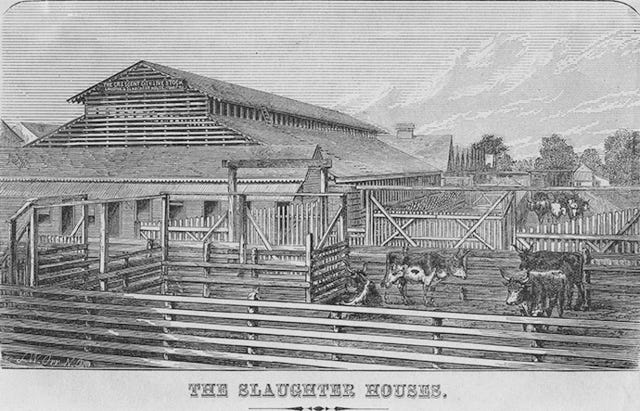
The Slaughterhouse Cases arose out of Louisiana regulation to combat water pollution. Essentially, Louisianan butchers in New Orleans butchered so many animals every year that the Mississippi River would fill with offal, feces, urine, blood, and other animal matter. This lead to disease outbreaks in the local area, namely cholera, and a city-wide stench. However, many of these butchers operated outside the city limits, meaning that New Orleans itself could not regulate the issue enough to solve it, and so the State of Louisiana stepped in. To solve this, Louisiana passed legislation to charter a private company that would rent out space for individual butchers to practice their trade (several other States had similar laws used to confine butchers); operating a butchery anywhere else was punishable by law. Naturally the butchers were not pleased by this, and so they filed suit (in several different cases, hence the plural “Slaughterhouse Cases”) against Louisiana to enjoin this act. The lower Courts all found for the Butchers, but SCOTUS overruled after all the cases were consolidated.
In it’s holding, SCOTUS determined some very important things about the 14th Amendment which have shaped 14th Amendment Jurisprudence to this day. In their holding, SCOTUS determined that the 14th Amendment’s Privileges or Immunities Clause (“No State shall make or enforce any law which shall abridge the privileges or immunities of citizens of the United States....”) only protected the rights of National citizenship. Relying on a previous case, SCOTUS listed what few rights this actually entails (right to travel between States, right to seek habeas corpus, right to hold property in multiple States, etc.) It explicitly held that the Bill of Rights was not enforceable against the States. That is to say, the Federal Government could not infringe upon your 2nd Amendment rights, but the States could, so long as their own laws allowed it.
This was quite controversial. The Slaughterhouse Cases were decided on a 5-4 split, and many people believed in each side of the argument; that the Bill of Rights was/was not Incorporated through the 14th Amendment. Regardless, the 14th Amendment’s Privileges or Immunities Clause was rendered basically pointless by this case (decided less than 5 years after the 14th Amendment was ratified no less).
Due Process Explained
Due Process Clause of the 14th Amendment
SECTION 1. All persons born or naturalized in the United States, and subject to the jurisdiction thereof, are citizens of the United States and the State wherein they reside. No State shall make or enforce any law which shall abridge the privileges or immunities of citizens of the United States; nor shall any State deprive any person of life, liberty, or property, without due process of law; nor deny to any person within its jurisdiction the equal protection of the laws.
In the years afterwards, this crystalized into essentially two camps based on what SOCUTS calls “Substantive Due Process”. Substantive Due Process itself is also highly controversial, as it exists to establish rights (which is determined by SCOTUS) which are not actually established by the U.S. Constitution. Regardless, it has been controlling law for over a century now (though it has only been known under this name for slightly less than that).
Selective Incorporation- Substantive Due Process only protects rights which are “essential to well-ordered liberty”. What rights are actually “essential” for these purposes can obviously vary greatly from person to person.
Total Incorporation- No more (and no less) than the entire Bill of Rights being incorporated against the States.
Justice Clarence Thomas has been the biggest critic of Substantive Due Process in the modern era, going so far as to say that Substantive Due Process should be done away with in its entirety. This is, however, a minority position and most people fall into one of the two aforementioned camps.
Technically speaking, the Selective Incorporation camp is the one that has won out. Yet, on a practical level, the Total Incorporation camp has basically won. As mentioned before, the overwhelming majority of the Bill of Rights has been Incorporated. This was, however, a very gradual process. Each particularized right had to be Incorporated by SCOTUS in various individual cases, and so listing all the relevant cases is not exactly practical. See the above list for the few rights which are not Incorporated.
Before proceeding, I should also mention “Procedural Due Process” which is the other half of the Due Process Clause of the 14th Amendment. While Substantive Due Process is essentially a judicial fiction not found in the text of the U.S. Constitution, Procedural Due Process arises out of the direct language of the Due Process Clause. Perhaps unsurprisingly, Procedural Due Process is the less powerful of the two. While Substantive Due Process gives sweeping protection from government interference in a number of “rights” either in the Constitution or not (we will talk about the ones that aren’t enumerated momentarily), Procedural Due Process on the other hand only protects your right to things like a trial, adequate notice of legal action, cross-examination, etc. This is, essentially, a nothingburger today.
In addition to (most) of the Bill of Rights, SCOTUS has acknowledged a handful of other rights which are not enumerated in the text of the U.S. Constitution. It should be noted that these rights have little to do with the Civil Rights movement, and the 14th Amendment’s power in that area arises elsewhere. The following non-enumerated rights are guaranteed by Substantive Due Process under the 14th Amendment:
Use of contraception
This arose from 20th century legislation seeking to ban the use of contraceptives.
The right of families to choose to live together
As opposed to unrelated individuals living together, which SCOTUS explicitly rejected as a Substantive Due Process right.
Parental rights
This is essentially just the right of (fit) parents to make decisions regarding their own children. Very broad in reach.
Entry into marriage
Does not include polygamous marriages, pedophilic marriages, or incestuous marriages. Does include homosexual marriage and interracial marriages.
On the other hand, SCOTUS has explicitly rejected a number of rights:
Abortion
Only after the recent Dobbs decision; prior to this, Substantive Due Process protected abortion.
Unrelated people choosing to live together
As mentioned previously
Medical suicide
General right to “being left alone”
Argued based on prior rulings (such as the initial abortion caselaw) which established vague notions of privacy as guaranteed by the Constitution.
You have a right to not have your house searched unreasonably, but that doesn’t mean the government is unable to interact with you.
In general, basically every right not in the Bill of Rights or the list mentioned before this one.
As you can see, there is actually only a few rights which SCOTUS has more or less “invented” and most of them are not that objectionable. In fact, I think the only ones people would really take issue with are abortion (which has since been overruled) and gay marriage.
Race-related protections instead arise elsewhere.
Equal Protection Explained
Equal Protection Clause of the 14th Amendment
SECTION 1. All persons born or naturalized in the United States, and subject to the jurisdiction thereof, are citizens of the United States and the State wherein they reside. No State shall make or enforce any law which shall abridge the privileges or immunities of citizens of the United States; nor shall any State deprive any person of life, liberty, or property, without due process of law; nor deny to any person within its jurisdiction the equal protection of the laws.
Like the Privileges or Immunities Clause and Due Process Clause, Equal Protection arises out of Section 1 of the 14th Amendment.
The Equal Protection Clause basically serves to eliminate government discrimination against specific classes of people. However, the protected classes of people are quite limited. Naturally, this includes race/ethnicity but it also includes National Origin, Lawful Alienage Status (unless an exception applies), and Sex. SCOTUS has explicitly rejected the following classes as protected under the 14th Amendment: Age and Disabled persons (as a general rule, but the government is required to make reasonable accommodations to ensure they have access to things like the Court system).
I want to explicitly clarify that this ONLY applies to the States, and NOT private individuals. The reason you cannot discriminate against someone’s race for employment purposes is the Civil Rights Act, which derives its power to regulate private citizens from the Commerce Clause from Article 1, Section 8, Clause 3 of the U.S. Constitution. The Federal government has had the power to regulate in the private capacity since the Constitution was first penned (and Commerce Clause jurisprudence was developed). Equal Protection ONLY applies to State discrimination, and is enforceable under another clause of the 14th Amendment:
SECTION 5. The Congress shall have power to enforce, by appropriate legislation, the provisions of this article.
This clause allows the Federal Government to inhibit State discrimination in many powerful ways. While the Anti-commandeering Doctrine prevents the Federal Government from forcing State legislatures to write certain laws, or from commandeering State actors to enforce Federal law, the Enforcement Clause of the 14th Amendment provides a number of punishments for State Discrimination which effectively allows them to stop discriminatory State legislation/action. The most powerful of which is the fact that the Enforcement Clause of the 14th Amendment is an exception (and currently the ONLY exception) to the 11th Amendment’s Sovereign Immunity protection.
The Judicial power of the United States shall not be construed to extend to any suit in law or equity, commenced or prosecuted against one of the United States by Citizens of another State, or by Citizens or Subjects of any Foreign State.
Ordinarily, the 11th Amendment precludes all lawsuits seeking damages (monetary awards; does not preclude injunctions/etc.) unless the State itself specifically consents to such suits. However, the Enforcement Clause of the 14th Amendment allows the Federal government to subject the State’s to private suits seeking damages for the specific causes of action contained within the Civil Rights Act and similar legislation. This is a particularly devastating incentive to avoid discrimination, as it allows anyone who has been discriminated against to essentially become the enforcer of the 14th Amendment, rather than tying up the Federal Government with its enforcement.
Analysis
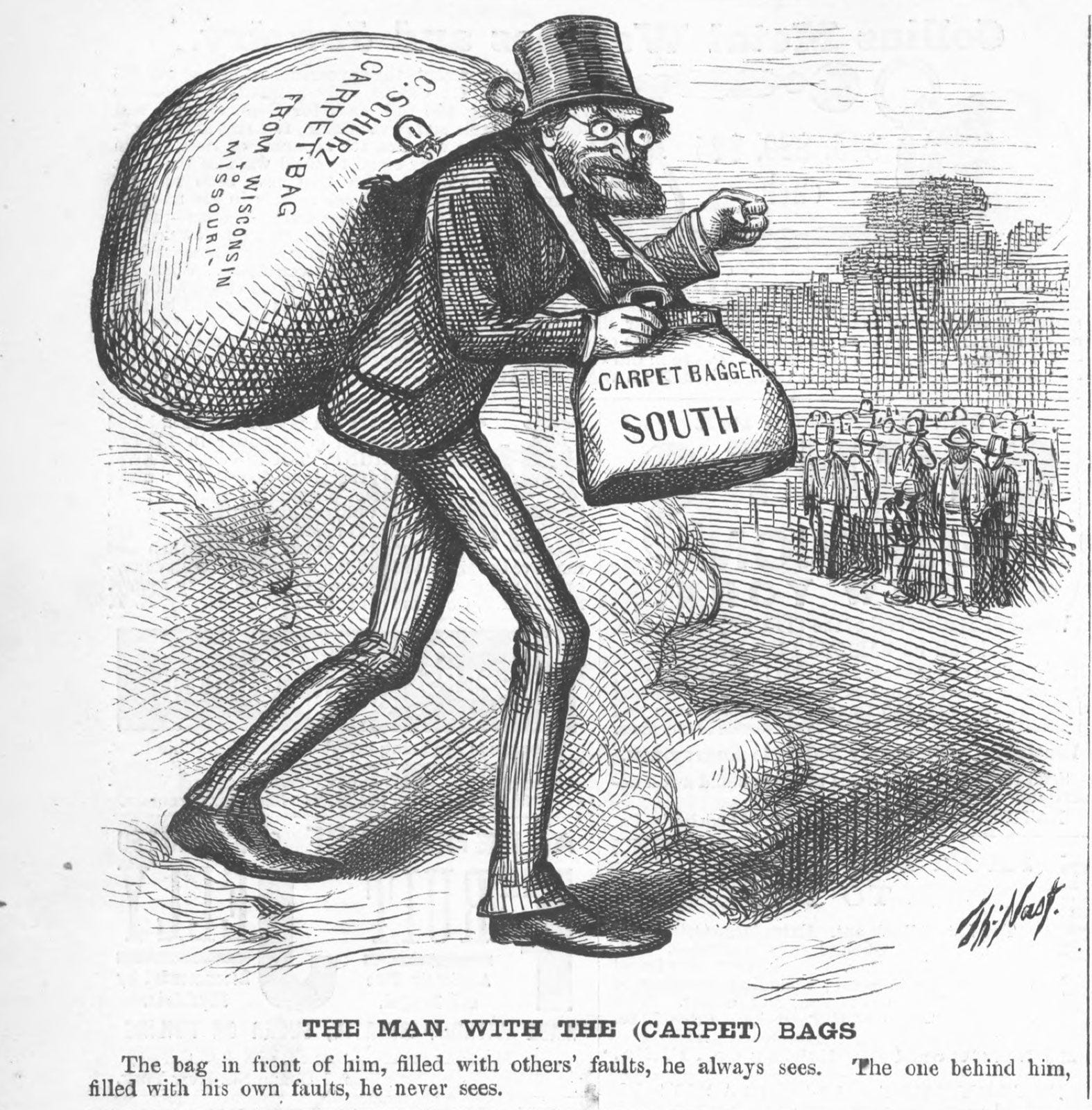
Like the rest of the Reconstruction Amendments, the 14th Amendment was primarily a vessel for Federal authority to crush the South following the war. Unlike the 13th (technically passed before the Civil War ended) and 15th Amendments, however, the 14th Amendment has strayed pretty far from it’s original intent. The 13th and 15th Amendments have pretty straightforward protections, but the meaning of protected rights under the 14th has, as you’ve seen, been the subject of basically endless debates. Today, it requires that almost the entire Bill of Rights, as well as a small handful of “unenumerated rights”, be protected by State governments.
In our circles, probably the most problematic aspects of this Amendment are as follows (in no particular order):
Birthright Citizenship
As a consequence of the so-called “Citizenship Clause” and SCOTUS’s holding in United States v. Wong Kim Ark.
Constitutional Right to Abortion (now defunct)
As a consequence of Substantive Due Process and SCOTUS’s holdings in Roe v. Wade and Planned Parenthood of Southeastern Pennsylvania v. Casey, now overruled by Dobbs v. Jackson Women’s Health Organization.
Gay marriage
As a consequence of Substantive Due Process and SCOTUS’s holding in Obergefell v. Hodges.
Restrictions on government enforced segregation/discrimination in general
As a consequence of the Equal Protection Clause and the related Enforcement Clause.
The following sections will be a more particularized examination of each issue.
Birthright Citizenship
I’m not going to comment on this too much, because I’m waiting to see how Trump v. Barbara plays out before having to rewrite this whole section.
I think most of us agree that this is not what was intended by the first section of the 14th Amendment, and that it’s also been disastrous for any attempt at repatriating immigrants. It simply needs to go.
Abortion
Roe was egregiously wrong from the start. Its reasoning was exceptionally weak, and the decision has had damaging consequences. And far from bringing about a national settlement of the abortion issue, Roe and Casey have enflamed debate and deepened division.7
Ordinarily I wouldn’t include this section since it isn’t good law anymore, but an analysis of how the abortion cases were stricken down will provide a good example of how it can be repeated.
Roe v. Wade is the case that most people think of when they hear “right to an abortion”, but it isn’t really the most important one. Roe was the first case in this family, and the one that initially set out a “right” to an abortion. However, it was an enormously sloppy way of doing so and caused issues for even the pro-abortion side. Even its supporters had to admit (and did in several law review articles) that Roe didn’t really make much sense from a legal perspective. Not only was it an unprecedented overstep of the Court (under the Roe framework, there was not a single State in compliance, with Roe going further than even the most “progressive” States), but it was also very vague as to exactly where the Constitutional right to an abortion supposedly came from. As Justice Alito wrote in his opinion in Dobbs:
The Constitution makes no express reference to a right to obtain an abortion, and therefore those who claim that it protects such a right must show that the right is somehow implicit in the constitutional text.
Roe, however, was remarkably loose in its treatment of the constitutional text. It held that the abortion right, which is not mentioned in the Constitution, is part of a right to privacy, which is also not mentioned. And that privacy right, Roe observed, had been found to spring from no fewer than five different constitutional provisions—the First, Fourth, Fifth, Ninth, and Fourteenth Amendments.
The Court’s discussion left open at least three ways in which some combination of these provisions could protect the abortion right. One possibility was that the right was “founded ... in the Ninth Amendment’s reservation of rights to the people.” […] Another was that the right was rooted in the First, Fourth, or Fifth Amendment, or in some combination of those provisions, and that this right had been “incorporated” into the Due Process Clause of the Fourteenth Amendment just as many other Bill of Rights provisions had by then been incorporated. […] And a third path was that the First, Fourth, and Fifth Amendments played no role and that the right was simply a component of the “liberty” protected by the Fourteenth Amendment’s Due Process Clause.
Roe expressed the “feel[ing]” that the Fourteenth Amendment was the provision that did the work, but its message seemed to be that the abortion right could be found somewhere in the Constitution and that specifying its exact location was not of paramount importance.8
This [among other legal issues I don’t really want to explain] led to Planned Parenthood of Southeastern Pennsylvania v. Casey. Casey is [was, RIP BOZO] the controlling abortion case. It basically served to tighten up the Roe holding from a legal perspective, but it also did away with the trimester framework of Roe and replaced it with the “undue burden test”. Nonetheless, it still skirted around the issue of what part of the Constitution actually guarantees abortion.
Opponents of Roe and Casey continuously pointed out this flaw, leading the pro-abortion proponents to rely on Substantive Due Process for their Constitutional basis. This ultimately gave way to Dobbs.
We hold that Roe and Casey must be overruled. The Constitution makes no reference to abortion, and no such right is implicitly protected by any constitutional provision, including the one on which the defenders of Roe and Casey now chiefly rely—the Due Process Clause of the Fourteenth Amendment. That provision has been held to guarantee some rights that are not mentioned in the Constitution, but any such right must be “deeply rooted in this Nation's history and tradition” and “implicit in the concept of ordered liberty.”9
This holding was important because it seems to indicate a more consistent adherence to the Glucksberg test [must be “deeply rooted in this Nation’s history and tradition”]. This is critical, because it provides a basis for overturning gay marriage.
Gay Marriage
The Glucksberg test is important in light of the Hodges decision, because marriage (unsurprisingly) has very traditional roots. Historically, marriage has been something left entirely to the States to regulate. State government details what it recognizes as a valid marriage, how to go about getting married, and the benefits it confers to married couples.
Naturally, homosexual unions were not recognized for most of U.S. history. In more recent decades, some States began to allow same-sex unions and this began to cause tension with other States that did not recognize them. Namely because the Full Faith and Credit Clause ordinarily requires that the States honor the judgments of Courts from other States. Because marriages are generally either recorded or performed by the Courts, a same-sex couple could be married in a State that recognizes such unions, and then force a State that did not allow such unions to recognize the marriage anyway.
This part of the holding in Hodges (the other being that you can’t restrict same-sex unions in general). Requiring States to recognize out of State same-sex unions is probably not a problem from a legal standpoint as much as a contrived right to gay unions, but this article isn’t an analysis of the Full Faith and Credit Clause.
Because of the aforementioned historical precedent for marriage, SCOTUS has been generally reluctant to regulate marriage, and generally leaves it to State Courts and State Legislatures. The Glucksberg Test (which hasn’t always been applied consistently) may provide a solution. With Dobbs striking down abortion on the grounds that it is not founded in the Nation’s history, there is a good argument to be made that homosexuals have not historically enjoyed marriage rights, and therefore should not receive Constitutional protections for it.
This is something that the decent in Dobbs picked up on, and is why you heard a lot of people saying that Dobbs could be grounds to overturn Hodges and other libtard rulings. I don’t really think it would do much against the Civil Rights cases, since those are pretty firmly within the sphere of the Equal Protection language of the 14th, and not really matters of Due Process like gay marriage, however.
The lack of historical precedent for recognition of same-sex unions, combined with the fact that SCOTUS has refused to recognize a general Constitutional right to marry, provide grounds to review and potentially overturn Hodges.
Courts have consistently recognized that there is no general right to marry, as States may properly deny marriages in cases where polygamy, incest, and pedophilia come in to play. Often times these cases are argued on the basis that there is no historical precedent to, for example, a right to polygamous marriage. This is of course obviously inconsistent with Hodges.
Legally, I think there is a sound argument to overrule at least the part of Hodges that establishes homosexual unions as a right, but the bigger problem is whether or not you can get people to support it. Most of us know by now that even Conservatives today tend to support homosexual unions. This causes issues with getting support for overturning Hodges, and is a bigger issue than the legal merits in my opinion.
Civil Rights (Generally)
I want to reiterate that the reason why you or I cannot racially discriminate in the hiring process is because of Federal legislation, NOT Constitutional Amendments. This actually makes it easier to allow for private discrimination, because all we would have to do is get enough Congressional support to repeal the Civil Rights Act, rather than having to go through then entire Constitutional Amendment process (which, if you remember from High School Civics, is a LOT harder than repealing legislation).
Stuff like Title IX (can’t receive Federal funding if you discriminate based on sex) is in this same boat; can be repealed through the Legislature without the need for a Constitutional Amendment.
Unfortunately, I don’t really see a way around things like Brown v. Board of Education short of amending the Constitution. This is primarily because most of the Civil Rights Cases (as in, the ones about black people) rest on Equal Protection grounds, rather than the (Substantive) Due Process grounds of abortion and homosexual unions. The Equal Protection Clause is pretty cut and dry about it’s prohibition on racial discrimination, and doesn’t require some sort of contrived justification like abortion did.
On an individual basis, some of these cases may lack an actual factual basis for their claims (for example, I’m skeptical of Brown v. Board of Education on a factual basis), but there is no sweeping rule that would allow you to overturn them in the same way that you could with abortion/etc.
Conclusion
I don’t really take issue with most of the Incorporation of the Bill of Rights. I generally agree with the Selective Incorporation camp, but there are a few provisions I don’t think should be Incorporated. For example, I don’t agree with the Incorporation of the Establishment Clause, as there is basically no historical precedent for it.10 I would apply the Glucksberg test to the Bill of Rights, as well as the unenumerated rights of Substantive Due Process. I think, for example, there is a good argument for the Incorporation of the Free Speech Clause of the First Amendment, even though I disagree with the Incorporation of the Establishment Clause.
I think in general this also makes things much easier for the legal system. With the Incorporation of the Bill of Rights, you always know that there is a bottom line for everything no matter what Court you are in. For example, you know that you have a 4th Amendment Right against Unreasonable Searches and Seizures as a baseline, whereas otherwise you could potentially have literally 0 protections.
This also serves to centralize America in a way which minimizes the negative impact on State governments. I don’t take issue with the increasing power of the Federal government over the centuries, and I think it’s something that is required of modern countries. But I also think that the Republic is the optimal form of government for producing high-quality culture, which I think is also the point of Civilization. By Incorporating our most important document, we add legitimacy and prestige to the Federal government in the same way that the Pledge of Allegiance does. Technically Incorporation is more intrusive, as it places limits on State governments, but I think this point is moot when you consider that the States tend to place the same or even greater limits on themselves.
That being said, it is not without issue. There are certain parts of 14th Amendment jurisprudence which simply do not align with the rest of the American legal system. Roe v. Wade was only the most blatantly retarded decision (I highly suggest you read Dobbs in full to really appreciate how stupid it was), and hopefully not the last.
It also, through its Equal Protection Clause, has caused a lot of issues for those of us who seek to deal with the racial tension in the Country in a more, erm… shall we say “permanent” manner? It doesn’t matter if you want TND, Segregation, Repatriation, or anything else. It’s plainly contrary to the plain text of the Equal Protection Clause. That’s something that we will ultimately have to deal with in one way or another if we ever want to achieve our grandest political machinations.
Ibid.
Ibid.
Long read but well worth it. You explain it all well, Chandra would be proud
Have you heard about the argument that abortion is not only not protected by the 14th amendment, but that life is protected by the equal protection clause? ie the feds could force pro-abortion States to ban abortion anyways?